Why SEO matters for dumpster rental companies
SEO, or Search Engine Optimization, gets dumpster rental companies found online and brings in more customers. When these businesses optimize their websites and content for search engines, they can significantly improve their chances of appearing at the top of search results when potential customers look for rental services.
How SEO drives online visibility and leads
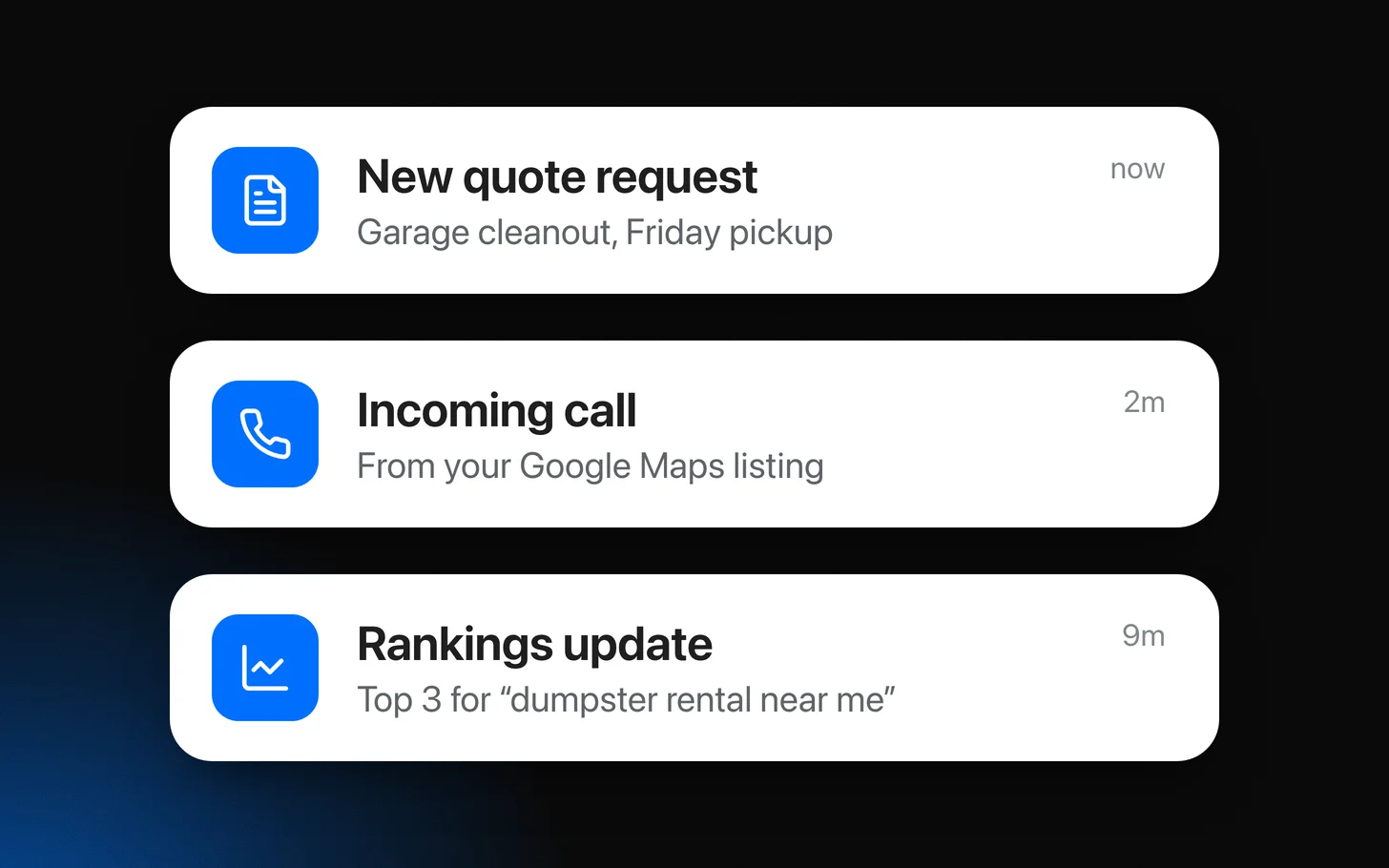
For a dumpster rental business, SEO focuses on reaching people who are ready to book a container. An effective SEO strategy helps the company's website appear for relevant searches, bringing in more visitors from search results and more leads. That visibility is particularly important in a business where local service is central and customers often want a rental option that's quick and convenient.
How SEO fits into a broader digital marketing mix
SEO works best as part of a broader digital marketing strategy that also includes social media, email marketing, and pay-per-click (PPC) advertising. When each marketing effort supports the others, dumpster rental companies gain a stronger overall presence. A cohesive online presence can build brand awareness, help them engage with customers, and drive conversions.
Local SEO: Capturing your nearby market
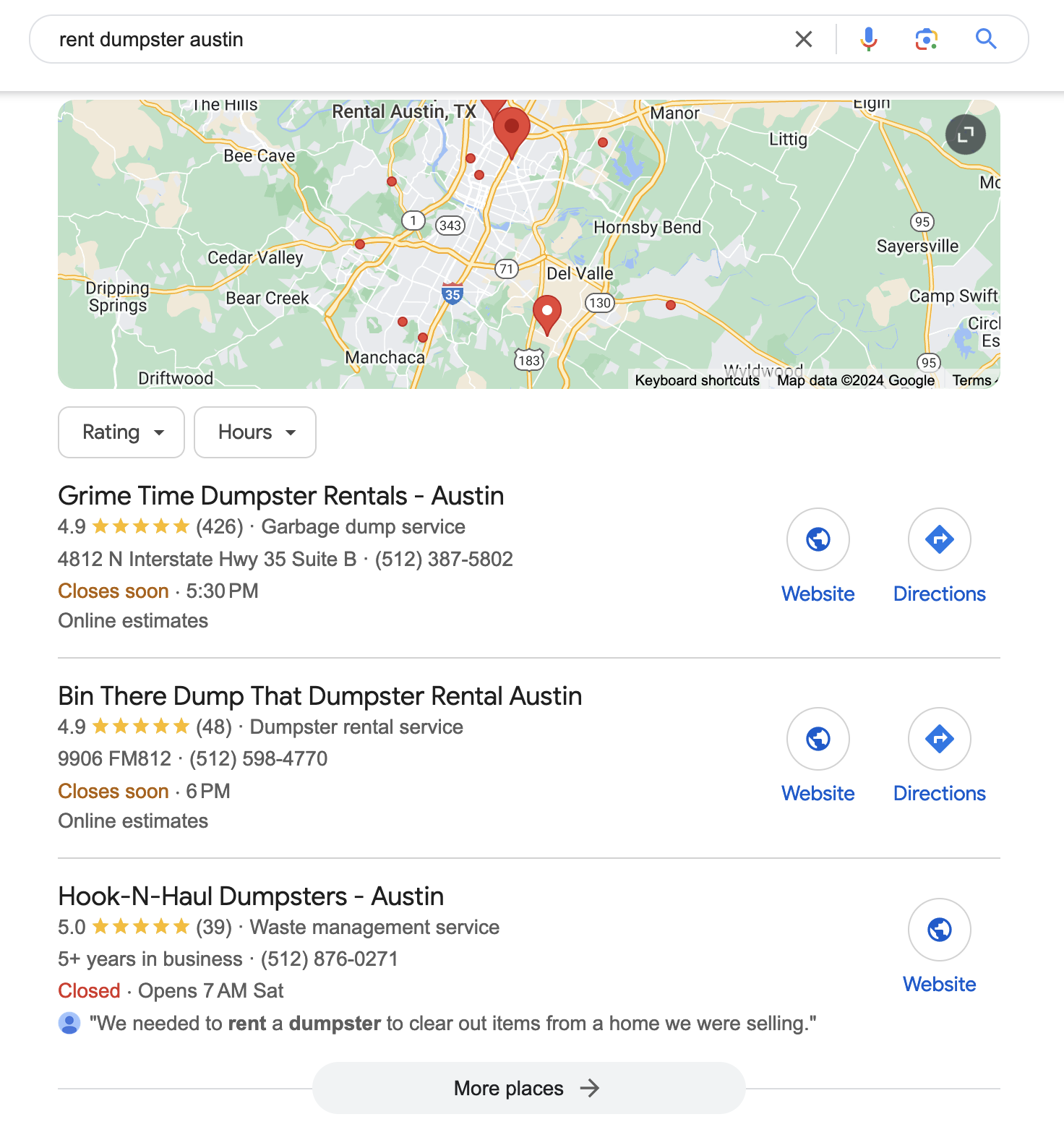
Local SEO is central to dumpster rental companies looking to connect with nearby customers. To connect with nearby customers through local SEO, your business needs to appear prominently in local search results.
Optimizing Google Business Profile for local visibility
Your Google Business Profile (GBP) is a critical tool for local SEO. Take these steps to optimize it:
- Complete Every Section: Provide comprehensive information about your business, including hours, services, and photos.
- Encourage Reviews: Positive reviews can improve your visibility and make your business more appealing to potential customers.
- Post Regularly: Use the posts feature to share updates and offers. Regular posts help keep your profile active and engaging.
Keeping your NAP consistent everywhere
Your Name, Address, and Phone number (NAP) need to match across the web. That consistency is essential for local SEO for home service businesses, so check these places:
- Business Directories: Keep your listings consistent on platforms like Yelp, Yellow Pages, and industry-specific directories.
- Social Media Profiles: Use the same contact information across all your social channels.
- Your Website: Put accurate NAP information in your site's footer and on a dedicated contact page.
Building a strong backlink profile
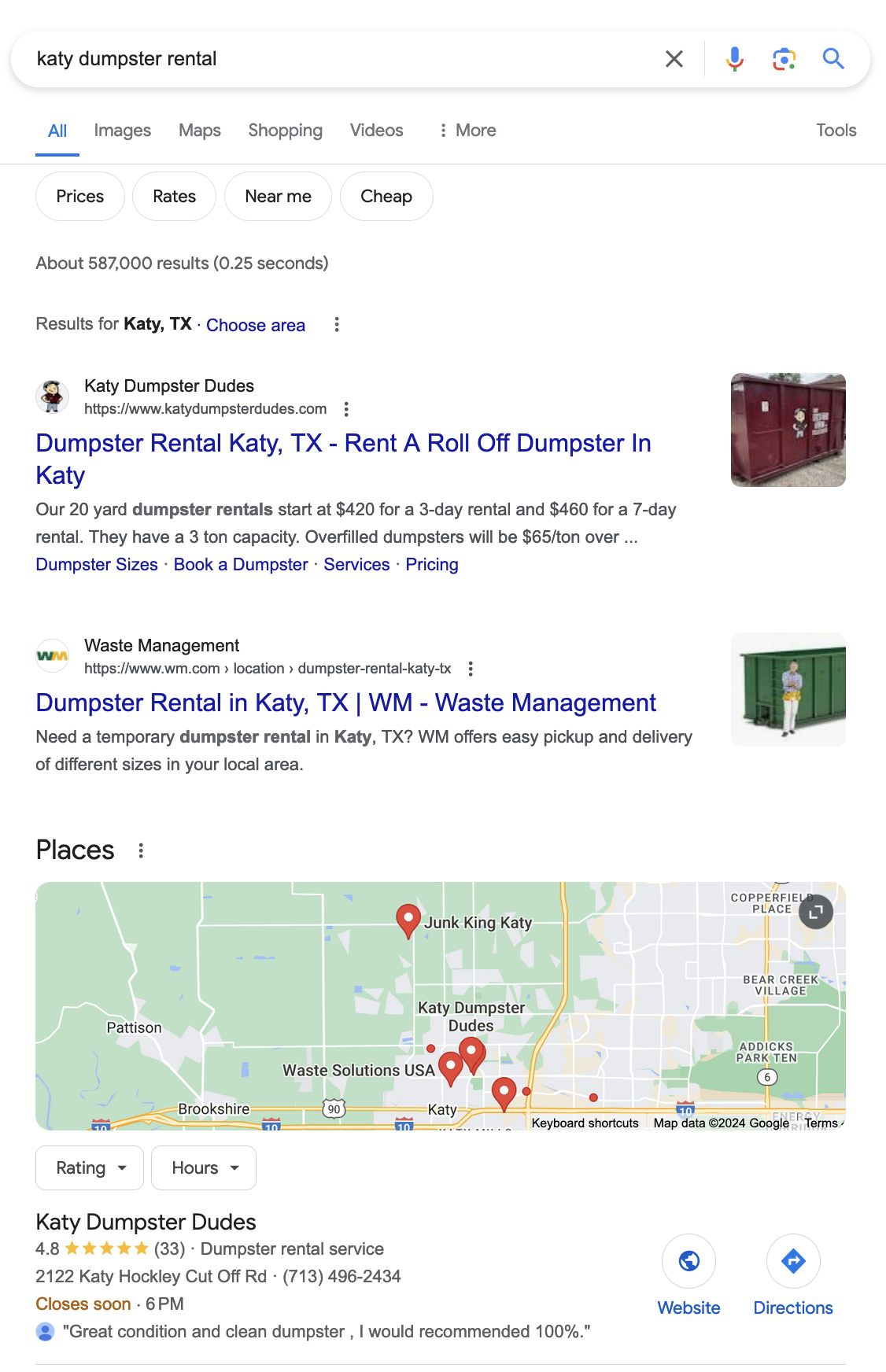
For dumpster rental companies, backlinks are a vital component of SEO and serve as endorsements for your website. They can significantly boost its authority and search engine rankings.
Why backlinks still matter
Backlinks can help your site in several ways:
- Visibility: Search engines see backlinks as votes of confidence, which can improve your site's visibility.
- Authority: Links from reputable sources strengthen your backlink profile and increase your website's authority.
- Traffic: Quality backlinks can bring more organic traffic to your site from other websites.
How to earn high-quality backlinks
You can work toward high-quality backlinks through these activities:
- Shareable content: Publish informative articles and guides that others will want to link to.
- Industry connections: Collaborate with influencers and authoritative figures in the waste management industry.
- Community events: Take part in local events and sponsorships that may lead to online mentions.
Keeping your backlink profile healthy
Keep an eye on the links pointing to your site:
- Regular audits: Use SEO tools to audit your backlink profile regularly.
- Disavow bad links: Disavow links from low-quality or irrelevant sites to maintain a healthy backlink profile.
Technical SEO: Website performance fundamentals
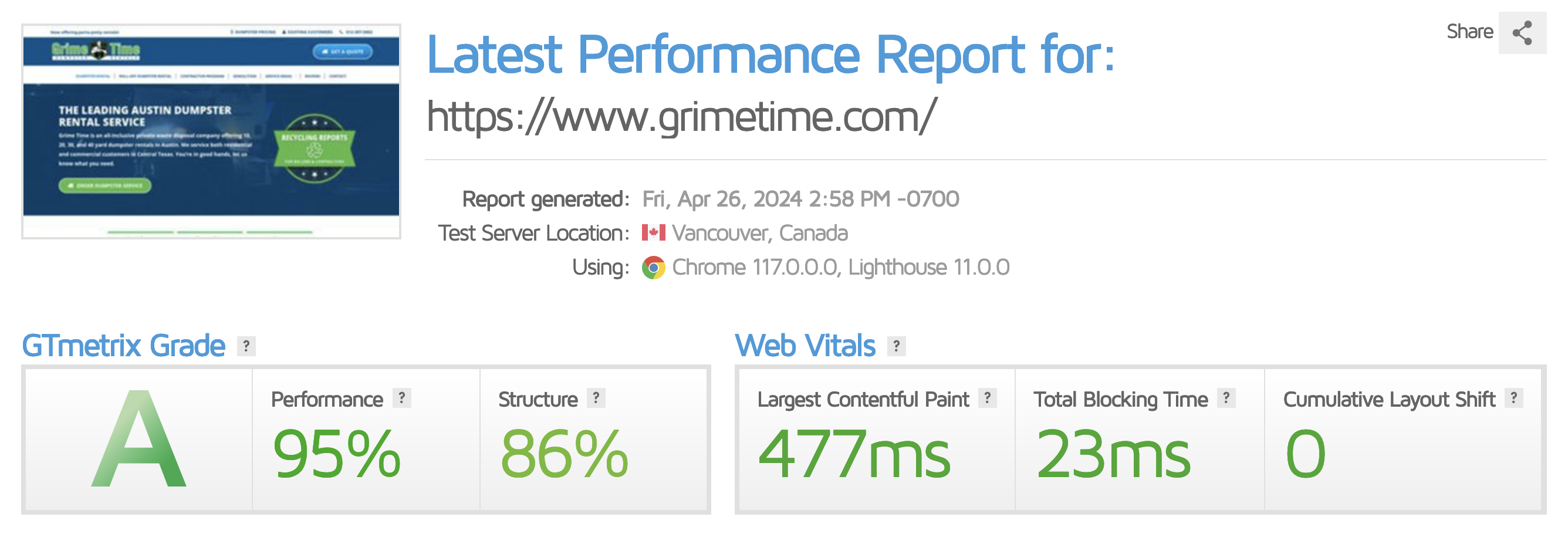
For dumpster rental companies, technical SEO is a critical part of an effective online strategy. It makes your website visible to search engines and easy for people to use.
The technical elements that matter most
For a dumpster rental website, these technical elements deserve attention:
- Mobile Responsiveness: Your site needs to display correctly across devices and screen sizes.
- Site Speed: Fast loading helps retain visitors and supports search engine rankings.
- Secure Sockets Layer (SSL): An SSL certificate supports website security and helps users trust your site.
- Clean URL Structure: Keep URLs readable and straightforward, and include keywords where they fit.
Why site speed and mobile make or break rankings
Improving site speed and mobile responsiveness directly affects SEO:
- User Experience: A site that loads quickly and responds well on mobile keeps users engaged and reduces visitor drop-offs.
- Search Ranking: Search engines favor sites that load quickly and work well on mobile devices.
Locking down security and crawlability
Keep your site secure and easy for search engines to access:
- Implement SSL: Use HTTPS to secure your site and protect user data.
- Use a Sitemap: Give search engines a clear sitemap to help them move through your site.
- Robots.txt: Use this to point search engines to the important pages of your site.
Building your dumpster rental SEO strategy
A strong online presence for your dumpster rental business calls for a strategy built on keyword research, on-page SEO, and off-page SEO. You also need to understand your market as you put that strategy to work.
The core pieces of an effective strategy
An effective SEO strategy for dumpster rental businesses has several core parts. They include:
- Keyword Research: Find the terms potential customers use when they search for dumpster rental services.
- On-Page SEO: Work on individual pages to help them rank higher and attract more relevant traffic.
- Off-Page SEO: Build your site's reputation and authority through links to your site and social media engagement.
- Content Creation: Develop informative, engaging content that addresses customer needs and questions.
- Technical SEO: Structure your website so search engines can understand it easily.
How to approach keyword research and selection
As you select keywords, consider these factors:
- Relevance: Choose keywords that accurately describe your services.
- Search Volume: Target keywords with a sufficient number of searches.
- Competition: Consider the level of competition for each keyword.
Putting on-page and off-page tactics to work
For on-page SEO, use targeted keywords to optimize title tags, meta descriptions, and content. Off-page SEO includes these activities:
- Link Building: Acquire high-quality links to your site from reputable sources.
- Social Media Marketing: Engage with customers and share content on social platforms.
Driving SEO with content marketing
Content marketing helps dumpster rental companies connect with their audience and strengthen their SEO. Valuable content can attract potential customers and help dumpster rental businesses establish themselves as industry leaders.
Content types that work for dumpster rental SEO
To engage potential customers and improve SEO, consider these content formats:
- Informative Blog Posts: Share insights about waste management and environmental care.
- How-To Guides: Walk readers through choosing the right dumpster size or preparing for a rental, step by step.
- Customer Testimonials: Highlight positive experiences to build trust and credibility.
- FAQ Pages: Answer common customer questions. These pages often rank for the exact query.
Weaving industry-specific keywords into content
Work industry-specific keywords into your content by:
- Analyzing Search Trends: Use tools to identify searches related to dumpster rentals.
- Keyword Placement: Place keywords in titles, headers, and throughout the content.
- Balancing Keyword Density: Keep the writing natural while including keywords in line with SEO best practices.
Reading the dumpster rental market
Current trends shape your SEO strategy, and the dumpster rental industry's growth, closely tied to construction activity and waste management regulations, directly influences your planning. The market is estimated at $500 million to $557.6 million, and the average rental costs $469.29. The potential for monthly earnings exceeding $15,000 makes a case for taking your online presence seriously.
Market trends that shape SEO priorities
As the industry expands, your SEO strategy needs to keep pace with changing market conditions. Construction projects are increasing, and your content needs to target the growing number of waste disposal searches where new customers are.
Planning SEO around market growth
Projected market growth informs your SEO planning and guides investment in keywords and content that capture potential customers' attention. Understanding the industry's finances also helps you allocate your marketing budget to get a stronger return on your SEO investment.
Working regulatory compliance into SEO content
Construction and waste management regulations directly affect what your SEO content needs to cover. Your website needs to rank well and show that you meet environmental standards. Showing that you meet environmental standards signals your commitment to sustainability and legal compliance.
How social media supports SEO
Social media gives dumpster rental companies a way to support their SEO efforts. It can increase their online visibility and help them engage with customers.
Using social media to reinforce SEO
Social media can support SEO through:
- Content Distribution: Sharing blog posts and website content on social platforms can bring visitors to your website.
- Brand Awareness: A stronger online presence can build brand recognition and lead to more searches for your business.
- Customer Interaction: Engaging with customers on social media can lead to more shares and mentions that contribute to SEO.
Content formats that travel on social
Dumpster rental companies can create content people want to share:
- Educational Videos: Show proper waste disposal practices.
- Infographics: Present recycling statistics or explain how dumpster rental works.
- Customer Stories: Share testimonials and case studies that show the value of your services.
The indirect effect of social on search rankings
Social media engagement doesn't directly affect search rankings. It can influence them indirectly through:
- Driving Traffic: Social shares can bring more visitors to your website.
- Building Authority: Social signals can contribute to your website's perceived authority and credibility.
Nurturing leads with email marketing
For dumpster rental businesses, email marketing works alongside SEO to connect with the new leads SEO attracts. You can use those emails to help turn leads into loyal customers.
Segmenting your email list
You can make your emails more relevant by segmenting your list:
- Identify Customer Categories: Group subscribers based on criteria such as location, service interest, or past engagement.
- Tailor Content: Write emails that address each group's needs and interests. This can also make your campaigns more effective.
Personalizing campaigns for better engagement
You can personalize your emails in these ways:
- Using the Recipient's Name: Address recipients by name to build a personal connection.
- Behavior-Based Emails: Send targeted emails based on what someone has done, such as following up after a service inquiry or quote request.
Using email metrics to sharpen SEO
Your email metrics can help you refine your SEO strategy:
- Tracking Engagement: Review open rates and click-through rates to see which topics resonate with your audience.
- Monitoring Conversions: Check which campaigns lead to service inquiries or bookings, then use what you learn to guide your SEO content strategy.
Working through the tough parts of dumpster rental SEO
Dumpster rental companies need a strategic approach to SEO in a competitive market. They face challenges staying ahead in search rankings and following industry regulations.
Competing in tight markets and staying current with algorithms
To stay competitive, your business needs to:
- Research competitors: Study their strategies and identify gaps in the market that your business can address.
- Keep up with algorithms: Follow search algorithm updates and adjust your SEO tactics as they change.
- Use advanced SEO techniques: Apply local SEO, voice search optimization, and schema markup to outperform competitors.
Staying compliant in the content you publish
Regulatory compliance is non-negotiable. Ensure your SEO content:
- Reflect industry standards: Include eco-friendly practices and sustainability trends relevant to waste management.
- Follow legal requirements: Stay current on regulations and show your compliance through your content.
Measuring SEO success and ROI
Evaluating how well your SEO strategy works is essential to your dumpster rental company's growth. They give you insight into how your SEO efforts are performing and their return on investment (ROI).
The tools and metrics worth tracking
A few tools and metrics can tell you whether SEO is working:
- Google Analytics: Tracks website traffic, user behavior, and conversion rates.
- Search Console: Tracks search rankings, impressions, and click-through rates (CTR).
- Conversion Tracking: Measures visitor actions, including quote requests and contact form submissions.
Why conversion optimization belongs in SEO
Conversion optimization is integral to SEO success and focuses on:
- User Experience: Improving site navigation and load times to increase user engagement.
- Call-to-Action (CTA): Writing compelling CTAs to increase conversion rates.
- A/B Testing: Trying different website elements to find what drives conversions.
Key takeaways for dumpster rental SEO
SEO for your dumpster rental company takes planning and technical know-how. It also calls for ongoing adjustments as the digital environment changes.
Keeping up with SEO trends and algorithm shifts
Staying competitive means keeping track of changes and adjusting your approach:
- Monitor Industry News: Check SEO news sources and forums regularly for updates on algorithm changes.
- Attend Webinars and Workshops: Learn about emerging SEO techniques from industry experts and peers.
- Use Analytics: Review your website data for trends, then adjust your strategies based on what you find.
Playing the long game with SEO
For sustained success, your company should keep working on its content, website, and relationships:
- Focus on Quality Content: Keep producing relevant, valuable content that addresses your audience's needs.
- Prioritize User Experience: Keep your website user-friendly, fast, and accessible across all devices.
- Build Relationships: Connect with related businesses and websites to build a strong backlink profile.